Back To All Blogs
How Financial Clarity Can Transform Your Business Operations
Financial clarity is more than knowing your balance sheet. It is about understanding the flow in and out of money within your business and using that to make strategic decisions. No matter if you're a small startup or a large enterprise, gaining insight into your financial operations will help you transform how you do business, from improving cash flow management to smarter budgeting and the reduction of risks. In this blog, we will explain how making your business financially transparent can become a game-changer and discuss ways of doing this with the use of an Autymate tool.

Financial clarity is integral to the smooth running of businesses, irrespective of the scale of the operation. This blog looks at how financial clarity can drive better business outcomes, underlining how to maintain and manage cash flow, mitigate risks, and budget effectively. It emphasizes that bus
Whether you're running a small, medium, or large enterprise, financial clarity is essential to making informed decisions, preparing for future growth, and driving long-term success. It's more than just knowing the balance in your bank account it’s about understanding where that money comes from, where it goes, and how you can optimize your resources to increase profitability.
In this blog, we'll explore how financial clarity can transform your operations, improve your decision-making, and help you gain a competitive edge in the marketplace.
What is Financial Clarity?
At its core, financial clarity provides a clear view of your business’s financial health. This includes a detailed understanding of income, expenses, profit margins, cash flow, debt obligations, and the overall financial situation. With financial clarity, business owners and managers can move beyond numbers and turn them into actionable insights that drive strategic decision-making.
Without financial clarity, decisions are often based on guesswork or outdated data, which can lead to costly mistakes. On the other hand, when you have clear financial visibility, you can manage risks, seize opportunities, and lay the foundation for sustainable growth.
How Financial Clarity Changes Business Operations
1. Helps You Make Informed Business Decisions
Financial clarity allows business leaders to make decisions based on solid data and insights. Whether it’s determining pricing strategies, planning marketing budgets, or making expansion plans, knowing your financial standing helps you approach each decision with confidence.
Example:
A wholesale company considering additional inventory for the upcoming season would benefit from financial clarity. With real-time insights into inventory turnover rates, cash flow projections, and expected demand, decision-makers can determine whether investing in more stock makes financial sense.
2. Enhances Cash Flow Management
Cash flow is the lifeblood of any business. Financial clarity provides a deep understanding of your cash inflows and outflows, enabling you to anticipate shortages and surpluses. Managing cash flow effectively can prevent operational bottlenecks and allow for more strategic investments.
With a clear picture of cash flow, you can:
- Identify patterns in spending and revenue generation.
- Predict cash shortages or surpluses in advance.
- Improve working capital by implementing proactive strategies.
Example:
A business with financial clarity can predict potential cash flow dips during off-seasons and take steps like opening a line of credit or reducing non-essential expenses to mitigate the impact.
3. Streamlines Budgeting and Forecasting
Effective budgeting and forecasting rely on accurate financial data. With financial clarity, businesses can create realistic budgets and reliable forecasts for the future. Understanding your current financial position allows you to project:
- Anticipated income from various sources.
- Variable and fixed costs.
- Profit margins and growth potential.
Armed with this data, you can better prepare for challenges and opportunities that lie ahead, ensuring a more strategic approach to growth.
4. Reduces Financial Risks
While risk is inherent in any business, financial clarity helps identify potential risks early. Real-time data enables you to track:
- Cash flow changes that might indicate financial pressure.
- Rising costs that could eat into profits.
- Unsustainable debt levels.
By identifying these risks early, you can take corrective measures, such as reducing non-essential expenses or securing additional funding before problems escalate.
5. Improves Operational Efficiency
Financial clarity shines a light on inefficiencies within your operations. When you know where your money is going, it becomes easier to identify areas for improvement. You can eliminate wasteful spending, streamline processes, and reallocate resources to maximize productivity.
Example:
A financial review might reveal that a large portion of expenses is concentrated in a department or service that doesn’t generate high returns. With this knowledge, you can adjust operations or allocate resources more effectively to optimize efficiency.
Key Strategies Toward Achieving Financial Clarity
Achieving financial clarity is not an overnight task—it requires intentional action and the right tools. Below are some key strategies to help your business gain financial clarity:
1. Employ Integrated Accounting Software
Integrated accounting software like QuickBooks, Xero, or Autymate enables real-time financial visibility. By consolidating all your data in one place, you simplify reporting and minimize the risk of errors.
With integrated software, you can:
- Track expenses and revenue in real time.
- Generate financial reports instantly.
- Automate invoicing and billing.
- Sync data with your bank accounts to keep everything up-to-date.
This saves time and ensures your team is always working with the most current information.
2. Continuously Review Financial Reports
To maintain financial transparency, regular reviews of your financial reports are essential. Key reports include:
- Profit and Loss Statements (P&Ls)
- Balance Sheets
- Cash Flow Statements
Review these reports monthly to spot discrepancies or identify financial trends that require attention. By doing so, you can stay on top of your business’s financial health and make adjustments as necessary.
3. Establish Real-Time Financial Dashboards
Financial dashboards bring your key financial metrics into one easy-to-read interface. With real-time data, you can track:
- Revenue growth
- Expense ratios
- Profit margins
- Cash flow
Having a clear view of these metrics at all times allows you to make informed, data-driven decisions on the fly.
4. Ensure Proper Tax Management
Financial clarity also means understanding your tax obligations throughout the year. By staying on top of taxes, deductions, and credits, you can avoid last-minute scrambles during tax season and improve your cash flow management.
How Autymate Helps Achieve Financial Clarity
At Autymate, we understand how crucial financial clarity is to business success. That’s why we’ve developed an all-in-one solution that streamlines financial management. Here’s how we can help:
- One-stop financial platform: Autymate consolidates all your financial data in one place, so you no longer have to juggle multiple tools and systems.
- Real-time data syncing: Our cloud-based platform provides automated updates and real-time insights to keep your financial reports up-to-date.
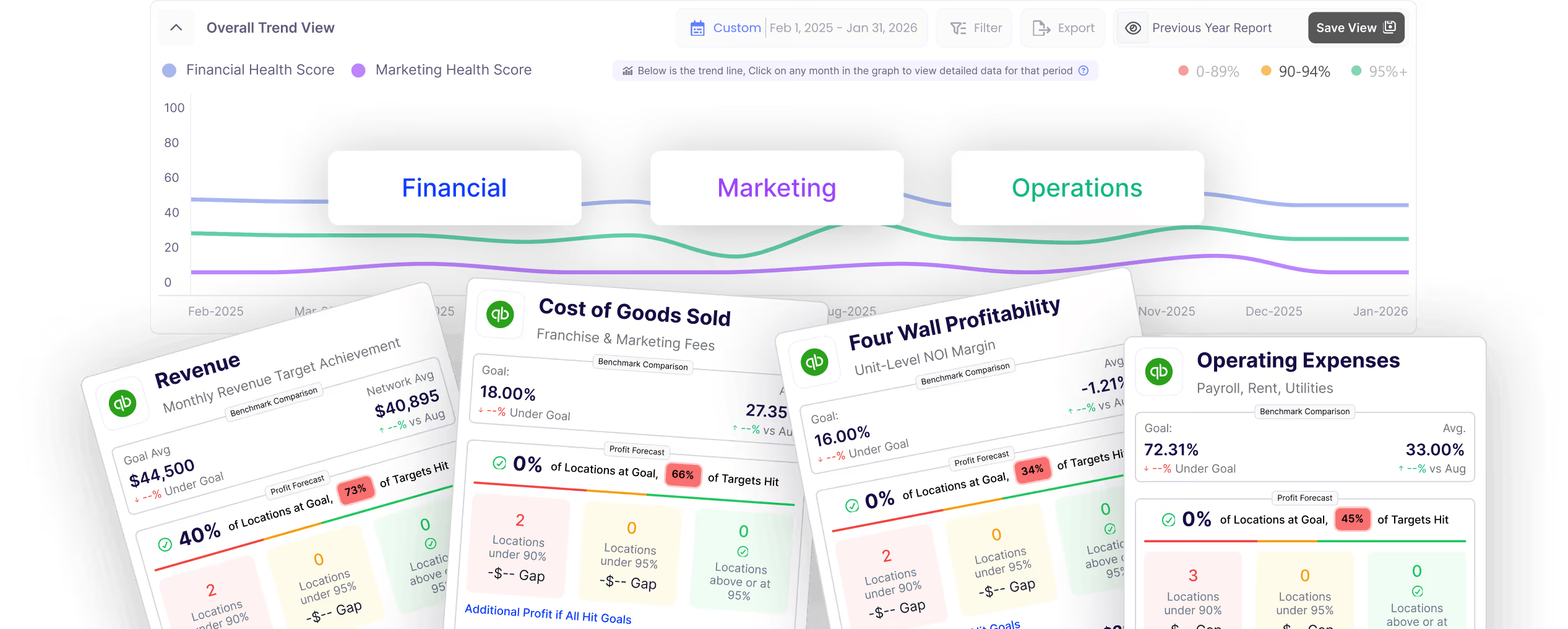
- Customizable dashboards: Our user-friendly dashboards allow you to track key financial metrics, ensuring you’re always aware of your business’s financial standing.
- Financial reports automation: Autymate automatically generates comprehensive financial reports, reducing the time spent on manual data entry and minimizing errors.
- Scalable solutions: As your business grows, our platform grows with you, ensuring you always have the financial clarity needed for success.
Conclusion: Embrace Financial Clarity for Long-Term Success
Financial clarity is essential for businesses of all sizes looking to thrive in today’s competitive environment. By improving visibility, accelerating reporting, and making data-driven decisions, financial clarity helps reduce risks, enhance profitability, and optimize operations.
For wholesalers, achieving financial clarity is crucial for inventory management, cost control, and market forecasting. The right tools and strategies can transform your operations and position your business for long-term growth.
With Autymate’s comprehensive financial tools, you can achieve the clarity needed to make informed decisions, improve cash flow, and drive profitability. Start optimizing your financial processes today to position your business for sustained success in the future. Start Working With Me Now
{{blog-final-cta}}
Ready to Find Your
Profit Leaks?