Back To All Blogs
Franchise Analytics: Turning Multi-Location Data into Actionable Insights
Managing a franchise business is fundamentally different from managing a single-location operation. Franchise organizations operate across multiple locations, regions, and sometimes countries—each with its own performance dynamics, operational challenges, and market conditions. While this structure enables rapid growth, it also creates complexity.
This is where franchise analytics becomes critical.
Franchise analytics allows franchisors and franchise operators to consolidate data from multiple locations, identify patterns, monitor performance, and make informed decisions at scale. When done correctly, analytics transforms fragmented operational data into actionable insights that drive consistency, profitability, and sustainable growth.
In this blog, we explore what franchise analytics is, why it matters, the key metrics franchises should track, common challenges, and how platforms like Autymate help franchises operationalize analytics with automation, governance, and real-time visibility.

Franchise Analytics is an important tool in which multi-location businesses can convert their scattered operational data into valuable insights. By integrating all the operational and financial data of the franchise locations, businesses can have clarity, consistency, and control. This blog discusse
What Is Franchise Analytics?
Franchise analytics is the practice of collecting, analyzing, and interpreting data from multiple franchise locations to understand business performance at both the local and enterprise levels.
It brings together data from areas such as:
- Sales and revenue
- Operations and compliance
- Marketing performance
- Finance and accounting
- Workforce and productivity
- Customer experience
Instead of reviewing each location in isolation, franchise analytics provides a centralized, holistic view of the entire franchise network.
The goal is not just reporting—but decision-making.
Why Franchise Analytics Matters in Multi-Location Businesses
As franchise networks grow, complexity increases exponentially. Manual reporting, spreadsheets, and disconnected systems quickly become unmanageable.
Franchise analytics matters because it helps organizations:
- Maintain brand and operational consistency
- Identify underperforming and high-performing locations
- Detect issues early before they impact revenue or compliance
- Scale operations without adding excessive overhead
- Make data-driven decisions instead of relying on intuition
Without analytics, franchises operate reactively. With analytics, they operate strategically.
The Challenge of Multi-Location Data
Franchise organizations often struggle with:
- Data scattered across multiple systems
- Inconsistent reporting formats from franchisees
- Delayed visibility into location performance
- Manual consolidation of reports
- Limited accountability for follow-up actions
Even when data exists, it is often not usable.
This is where analytics must go beyond dashboards and connect insights to action.
Key Franchise Analytics Metrics That Drive Insight
To turn data into value, franchises need to track the right metrics.
1. Location-Level Performance Metrics
- Revenue per location
- Sales growth trends
- Average transaction value
- Footfall and conversion rates
These metrics help identify which locations are thriving and which need intervention.
2. Operational Consistency Metrics
- Task completion rates
- Process adherence
- Compliance check results
- Audit findings
Operational analytics ensures that franchise standards are being followed consistently.
3. Financial Analytics
- Profitability by location
- Cost structures
- Expense variance
- Cash flow visibility
This allows franchisors to understand financial health beyond top-line revenue.
4. Marketing & Campaign Performance
- Campaign adoption by location
- Local execution quality
- ROI by region
- Lead-to-sale conversion
Marketing analytics ensures that national campaigns are executed effectively at the local level.
5. Workforce & Productivity Metrics
- Staff utilization
- Labor cost ratios
- Training completion
- Productivity benchmarks
This helps standardize performance expectations across locations.
6. Customer Experience Insights
- Customer satisfaction scores
- Complaints and resolution time
- Reviews by location
Customer analytics highlights service gaps and best practices.
From Data to Action: The Missing Link in Franchise Analytics
Many franchises invest in BI tools and dashboards—but still struggle to improve outcomes.
Why?
Because analytics without execution does not drive change.
Seeing a problem does not solve it. Acting on it does.
This is where platforms like Autymate play a crucial role.
How Autymate Helps Turn Franchise Analytics into Actionable Insights
Autymate is a workflow automation and governance platform designed to help organizations execute processes consistently at scale.
In franchise environments, Autymate acts as the bridge between analytics and execution.
1. Centralized Operational Visibility
Autymate provides a single platform to track:
- Location-level tasks
- Exceptions and delays
- Approvals and corrective actions
- Cross-team dependencies
Instead of static reports, leaders gain real-time operational insight.
2. Automating Actions from Analytics
Analytics identifies issues—Autymate ensures they are addressed.
For example:
- A low-performing location triggers a corrective action workflow
- Missed compliance checks automatically assign remediation tasks
- Marketing execution gaps generate follow-ups and approvals
Insights are automatically converted into structured actions.
3. Standardized Processes Across Locations
Autymate enforces:
- Standard workflows
- Clear ownership
- Defined timelines
- Mandatory approvals
This ensures consistency across franchise locations without micromanagement.
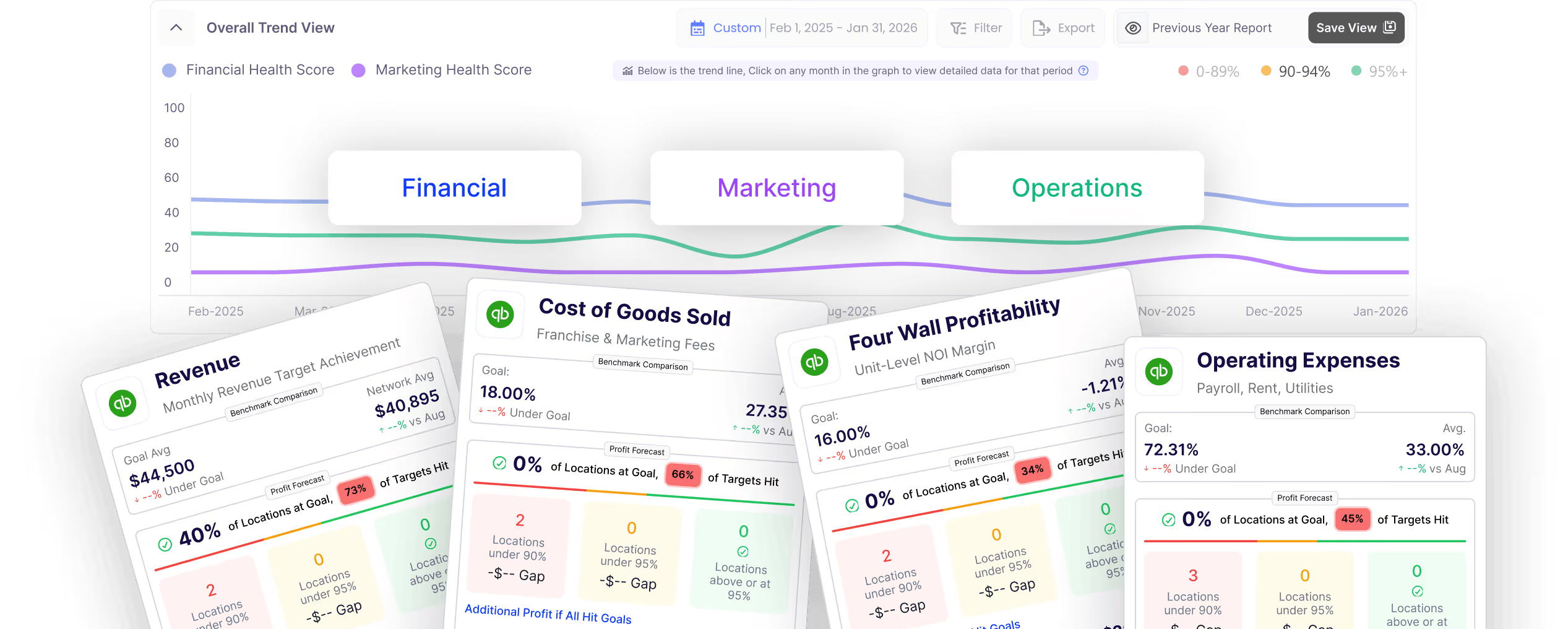
4. Real-Time Dashboards for Franchise Leadership
Autymate dashboards show:
- Which locations are on track
- Where bottlenecks exist
- What tasks are overdue
- Which teams need support
Leadership can act early—before problems escalate.
5. Governance, Compliance, and Audit Readiness
Every action in Autymate is logged:
- Who identified the issue
- What action was taken
- Who approved it
- When it was completed
This is essential for regulated industries and franchise compliance.
6. Scalability Without Complexity
As franchises grow:
- More locations
- More data
- More stakeholders
Autymate scales workflows and governance without increasing chaos.
Common Mistakes Franchises Make with Analytics
Despite best intentions, many franchises struggle due to:
- Focusing only on reporting, not execution
- Allowing locations to follow inconsistent processes
- Overloading teams with dashboards but no accountability
- Relying on manual follow-ups
- Lacking a single source of truth
Analytics must be operationalized to deliver value.
Best Practices for Franchise Analytics Success
Successful franchises follow these principles:
- Standardize data definitions across locations
- Focus on a few high-impact metrics
- Embed analytics into daily workflows
- Automate follow-up actions
- Ensure leadership visibility
- Balance local flexibility with central control
Autymate enables these best practices through structured automation.
The Business Impact of Franchise Analytics Done Right
Franchises that combine analytics with execution see:
- Improved location performance
- Faster issue resolution
- Stronger brand consistency
- Higher profitability
- Better franchisee engagement
- Confident, data-driven expansion
Analytics becomes a growth engine, not just a reporting function.
Why Franchise Analytics Is More Important Than Ever
Modern franchise networks face:
- Rising competition
- Higher customer expectations
- Increased compliance requirements
- Complex multi-location operations
Franchise analytics provides the clarity needed to navigate this complexity.
When paired with a platform like Autymate, analytics evolves from insight to impact.
Final Thoughts
Franchise analytics is no longer optional—it is essential for scaling multi-location businesses with confidence.
However, analytics alone is not enough.
True value comes when insights lead to action, accountability, and consistent execution.
As discussed in this blog, Autymate enables franchises to operationalize analytics, turning multi-location data into structured workflows, real-time visibility, and governed execution.
Ready to Find Your
Profit Leaks?