Back To All Blogs
Best Franchise Accounting Software in 2026: Complete Guide for Franchisors & Franchisees
Franchise accounting software helps franchise businesses manage financial data across multiple locations, entities, franchisees, and reporting structures.
Unlike basic accounting tools, franchise accounting software is built for the financial complexity of franchise networks. It helps franchisors see performance across the entire brand while giving franchisees the tools they need to manage day-to-day finances.
The best franchise accounting software in 2026 should help businesses:
- Manage multiple franchise locations
- Consolidate financial reports
- Track royalties and fees
- Standardize reporting across units
- Compare location-level performance
- Monitor cash flow
- Reduce manual accounting work
- Improve financial visibility across the network
- Use AI-powered insights to identify risks and opportunities faster
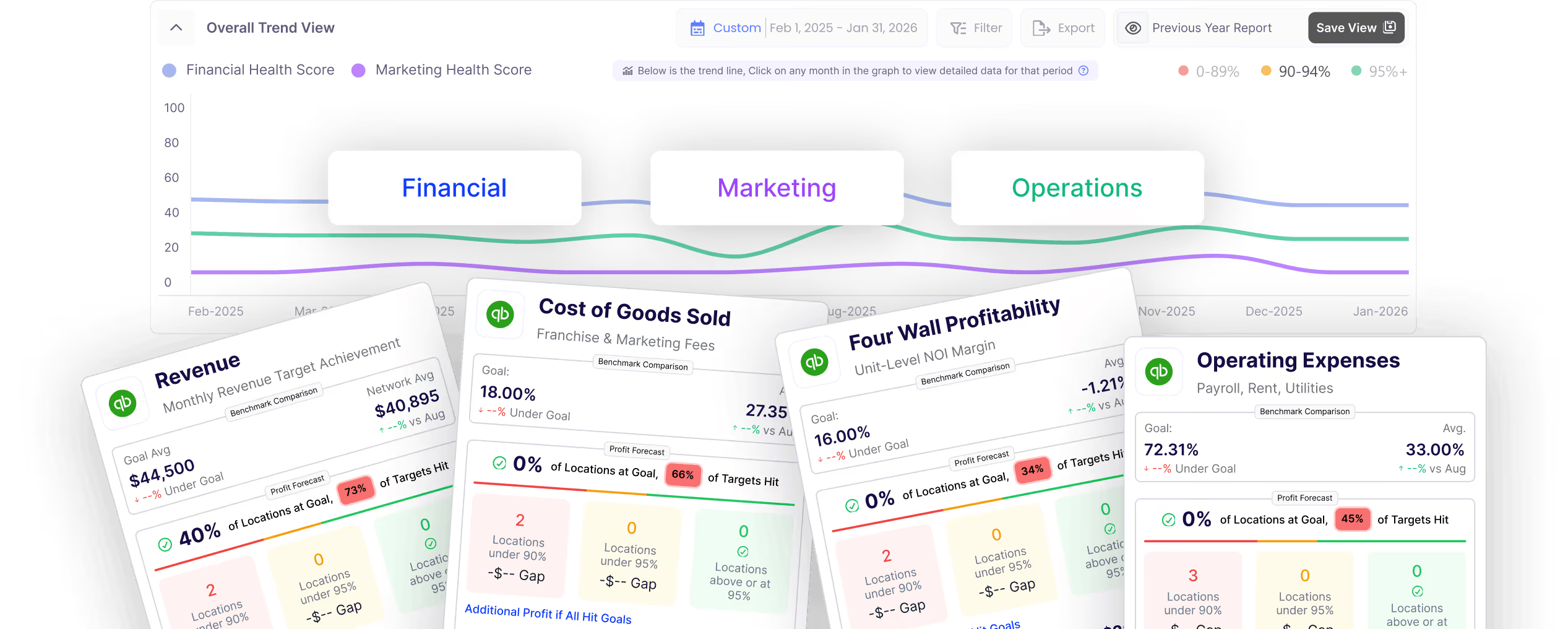
For franchise businesses that need real-time visibility, automated workflows, multi-location reporting, and AI-powered financial insights, Autymate is a strong choice.

Running a franchise means managing financial complexity that standard accounting tools were never designed to handle. This complete 2026 guide covers everything franchise owners need to know from what franchise accounting software actually is to the 12 must-have features, a practical 5-step selection framework, franchisor vs. franchisee needs, cloud vs. on-premise comparison, real ROI data, and implementation best practices. Whether you manage 5 locations or 500, this guide helps you make the right decision with confidence.
What Is the Best Franchise Accounting Software in 2026?
The best franchise accounting software in 2026 is the platform that can support both franchisors and franchisees without creating extra manual work.
For franchisors, the software should provide consolidated reporting, royalty tracking, performance benchmarking, standardized reporting, and network-wide financial visibility.
For franchisees, it should support daily bookkeeping, cash flow visibility, expense tracking, reconciliation, payroll-related reporting, and simple dashboards.
Autymate is built for franchise businesses that want to remove manual accounting work, track performance across locations, and make faster financial decisions using real-time dashboards and AI-powered insights.
What Is Franchise Accounting Software?
Franchise accounting software is a financial management platform designed for franchise businesses.
It helps manage accounting needs at two levels:
- The individual location level for franchisees
- The network level for franchisors
A franchisee needs tools to manage daily business finances. A franchisor needs visibility across the entire franchise network.
Franchise accounting software connects both sides by helping teams manage:
- Location-level bookkeeping
- Multi-entity reporting
- Royalty and franchise fee tracking
- Consolidated profit and loss reports
- Standardized chart of accounts
- Franchisee performance benchmarking
- Cash flow visibility
- Tax and compliance reporting
- Role-based access for different users
- Network-wide financial insights
In simple terms, standard accounting software helps one business manage its books. Franchise accounting software helps an entire franchise network operate with consistent, reliable financial visibility.
Why Standard Accounting Software Is Not Enough for Franchises
Many franchise businesses start with tools like QuickBooks, Xero, or other general accounting platforms.
These tools can work well for a single location. But as a franchise network grows, basic accounting software often becomes limiting.
Standard accounting software usually struggles with franchise-specific needs, such as:
- Consolidating reports from multiple franchise locations
- Calculating royalty payments automatically
- Comparing performance across different units
- Standardizing reporting across franchisees
- Managing multi-entity accounting
- Handling complex fee structures
- Tracking franchisee financial health
- Producing network-wide dashboards
- Supporting multi-location cash flow visibility
The problem is not that tools like QuickBooks or Xero are weak. The problem is that franchise accounting has different requirements.
A single business needs accounting records.
A franchise network needs:
- Consistency
- Consolidation
- Comparability
- Automation
- Visibility
- Control
- Scalable reporting
Without purpose-built franchise accounting software, finance teams often spend too much time collecting data, cleaning spreadsheets, chasing franchisees, and building reports manually.
The Biggest Financial Challenges in Franchise Accounting
Franchise accounting is more complex than standard business accounting because every location may have its own transactions, expenses, payroll needs, tax requirements, and reporting habits.
Here are the biggest challenges franchise businesses usually face.
1. Multi-Location Financial Visibility
Franchisors need to understand how every location is performing.
Without the right software, it becomes difficult to answer important questions such as:
- Which locations are profitable?
- Which units are underperforming?
- Where are expenses increasing?
- Which franchisees need support?
- Which locations are growing fastest?
- What is the overall health of the network?
Manual reporting makes this harder because data often arrives late, in different formats, and from different systems.
A franchise accounting platform gives franchisors a single view of financial performance across the network.
2. Royalty and Fee Tracking
Royalty tracking is one of the most important parts of franchise accounting.
Franchisors may collect:
- Royalty fees
- Marketing fees
- Technology fees
- Brand fees
- Support fees
- Other recurring franchise charges
These fees may be based on:
- Gross sales
- Revenue tiers
- Flat monthly amounts
- Location type
- Custom franchise agreements
Manual royalty tracking can create errors, delays, and disputes.
Good franchise accounting software should calculate fees automatically, track payment status, and create a clear audit trail.
3. Inconsistent Reporting Across Locations
If every franchisee reports finances differently, franchisors cannot compare performance accurately.
One location may classify marketing expenses one way. Another location may use a different category. A third location may report late or use a different accounting period.
This creates confusion.
A strong franchise accounting system helps enforce consistent reporting standards across the network.
This includes:
- Standard chart of accounts
- Standard report templates
- Consistent KPI definitions
- Shared reporting periods
- Clear financial categories
- Unified performance dashboards
Consistency makes comparison meaningful.
4. Cash Flow Visibility
Cash flow is critical for both franchisors and franchisees.
Franchisees need to know whether they can cover expenses, payroll, vendor payments, and local operating costs.
Franchisors need to understand the financial health of the network.
Cash flow can be affected by:
- Seasonal demand
- Rent and lease obligations
- Payroll costs
- Supply chain changes
- Local market conditions
- Delayed royalty payments
- Expansion expenses
Franchise accounting software helps teams monitor cash flow before issues become serious.
5. Multi-State and Multi-Jurisdiction Compliance
Franchise networks often operate across different cities, states, or countries.
This can create accounting and compliance complexity around:
- Sales tax
- VAT
- GST
- Payroll rules
- Local tax requirements
- Filing deadlines
- Nexus considerations
- Regional compliance obligations
The more locations a franchise has, the harder this becomes to manage manually.
A good platform helps organize financial data by location and supports cleaner reporting for tax and compliance needs.
6. Payroll and Labor Cost Complexity
Many franchise businesses operate in labor-intensive industries such as food service, fitness, retail, home services, hospitality, and personal care.
That means labor cost visibility is extremely important.
Franchise accounting software can help monitor the following:
- Payroll expenses
- Labor cost percentage
- Overtime trends
- Location-level staffing costs
- Payroll by department
- Profitability after labor costs
This helps franchisees control costs and helps franchisors identify locations that may need operational support.
Must-Have Features in Franchise Accounting Software
The best franchise accounting software should not only record numbers. It should help the entire franchise network operate with better visibility and control.
Here are the most important features to look for.
1. Multi-Entity Management
Franchise businesses need to manage multiple entities, branches, or franchise units.
A strong platform should allow franchisors to:
- View multiple locations from one place
- Separate financial data by entity
- Consolidate reports across units
- Add new locations easily
- Manage access by user role
- Compare units without manual spreadsheets
Multi-entity management is one of the biggest reasons franchises outgrow standard accounting tools.
2. Automated Royalty and Fee Tracking
Royalty tracking should not depend on spreadsheets.
The software should help automate:
- Royalty calculations
- Franchise fee tracking
- Marketing fee tracking
- Technology fee tracking
- Payment status monitoring
- Late payment visibility
- Audit trails for fee calculations
This reduces errors and helps protect franchisor-franchisee relationships.
3. Consolidated Financial Reporting
Franchisors need a clear view of the full network.
The software should help generate consolidated reports such as
- Consolidated profit and loss
- Network-wide revenue reports
- Location-level P&L reports
- Cash flow reports
- Balance sheet summaries
- Budget vs actual reports
- Franchisee performance reports
Consolidated reporting helps leadership make decisions based on complete information.
4. Location-Level Benchmarking
Franchise networks need to compare location performance.
A good platform should help identify the following:
- Top-performing locations
- Underperforming locations
- Locations with rising expenses
- Locations with strong margins
- Locations with cash flow risk
- Patterns across regions or business models
Benchmarking helps franchisors understand what is working and where support is needed.
5. Standardized Chart of Accounts
A standardized chart of accounts gives every location the same financial structure.
This matters because consistent categories make reporting more accurate.
With a standardized chart of accounts, franchisors can compare:
- Revenue
- Cost of goods sold
- Labor expenses
- Marketing spend
- Rent
- Utilities
- Profitability
- Operating expenses
Without standardization, location comparison becomes unreliable.
6. Real-Time KPI Dashboards
Franchise leaders need dashboards that show important metrics clearly.
Useful franchise KPIs include:
- Revenue by location
- Profit by location
- Gross margin
- Labor cost percentage
- Cost of goods sold
- Cash flow
- Royalty collection status
- Expense trends
- Budget variance
- Location ranking
- Same-store sales growth
Real-time dashboards help teams act faster instead of waiting for month-end reports.
7. Integrations With Existing Tools
A franchise accounting system should work with the tools franchisees already use.
Important integrations may include:
- QuickBooks Online
- QuickBooks Desktop
- Xero
- Sage
- POS systems
- Payroll platforms
- Banking tools
- CRM systems
- Inventory systems
- Spreadsheets
Good integrations reduce resistance and make adoption easier across the network.
8. Automated Reconciliation
Manual reconciliation takes time and increases the chance of errors.
Franchise accounting software should help automate:
- Bank reconciliation
- Transaction matching
- Duplicate detection
- Unmatched transaction alerts
- Location-level reconciliation
- Month-end close workflows
This saves time for finance teams and franchisees.
9. Role-Based Access Controls
Franchise systems need different access levels for different users.
For example:
- A franchisee should see their own location data
- A franchisor should see network-wide reports
- A regional manager should see locations in their region
- An accountant should access relevant financial records
- Executives should see dashboards and consolidated insights
Role-based access keeps sensitive financial data secure and organized.
10. AI-Powered Financial Insights
Modern franchise accounting software should help teams understand what the data means.
AI-powered insights can help identify the following:
- Unusual expense increases
- Underperforming locations
- Cash flow risks
- Margin changes
- Revenue drops
- Late royalty payments
- Cost trends
- Opportunities for improvement
This helps franchisors move from reactive reporting to proactive decision-making.
Franchisor vs Franchisee Accounting Needs
Franchisors and franchisees both need financial clarity, but they do not need the exact same view.
The best franchise accounting software should support both sides.
What Franchisors Need
Franchisors manage the overall brand and network.
They usually need:
- Consolidated financial visibility
- Royalty and fee tracking
- Location-level performance comparison
- Standardized reporting across units
- Franchisee financial health monitoring
- Network-wide dashboards
- Multi-entity reporting
- Audit trails
- Expansion planning support
- Early warning signals for underperforming units
Franchisors need software that helps them manage the full network strategically.
What Franchisees Need
Franchisees manage daily operations at the location level.
They usually need:
- Daily bookkeeping support
- Expense tracking
- Cash flow visibility
- Payroll-related reporting
- Bank reconciliation
- Invoicing and receivables
- Tax preparation support
- Clear royalty and fee visibility
- Simple financial dashboards
- Reports they can understand without needing deep accounting knowledge
Franchisees need software that makes financial management easier, not more complicated.
How to Choose the Right Franchise Accounting Software
Choosing the right platform requires more than comparing feature lists.
Use this practical framework before making a decision.
Step 1: Define Your Franchise Growth Plan
Start by understanding where your franchise is today and where it is going.
Ask:
- How many locations do we have today?
- How many locations will we have in three to five years?
- Are we expanding into new states or countries?
- Will we add new franchise models?
- Do we need multi-currency support?
- Will reporting complexity increase?
Choose software that can support both your current network and your future growth.
Step 2: Review Your Current Technology Stack
Look at the tools your franchisees already use.
Check:
- Accounting software
- POS systems
- Payroll platforms
- Inventory tools
- Banking workflows
- Reporting templates
- CRM systems
- Spreadsheets
The right franchise accounting software should fit into your existing workflow instead of forcing every location to rebuild its process from scratch.
Step 3: Identify Your Highest-Priority Features
Different franchise businesses need different reporting capabilities.
For example:
- A food franchise may care most about labor cost and cost of goods sold
- A fitness franchise may focus on membership revenue and location profitability
- A service franchise may prioritize job profitability and cash flow
- A retail franchise may need inventory and sales visibility
- A growing franchisor may need royalty tracking and consolidation first
Your software should match your operating model.
Step 4: Evaluate Onboarding and Support
Software adoption matters.
Even the best platform will fail if franchisees do not use it correctly.
Look for:
- Clear onboarding
- Franchisee training
- Support documentation
- Responsive customer support
- Guided implementation
- Easy setup for new locations
- Simple dashboards for non-technical users
Strong support is especially important when rolling out software across many locations.
Step 5: Calculate Total Cost of Ownership
Do not judge software only by the monthly subscription price.
Consider the full cost, including:
- Implementation fees
- Per-location pricing
- Integration costs
- Training time
- Support needs
- Manual work that remains
- Time spent by your finance team
- Future costs as you scale
A cheaper tool can become expensive if it creates more manual work.
Franchise Accounting Software Evaluation Checklist
Use this checklist when comparing platforms.
The software should support:
- Multi-entity management
- Multi-location reporting
- Automated royalty tracking
- Franchise fee tracking
- Consolidated financial reporting
- Standardized chart of accounts
- Real-time KPI dashboards
- Location-level benchmarking
- QuickBooks, Xero, or accounting tool integrations
- Bank reconciliation
- Role-based access controls
- Tax and compliance reporting support
- Scalable onboarding for new locations
- AI-powered financial insights
- Secure data access
- Audit trails
- Clear support and implementation help
- Predictable pricing at scale
The more of these requirements your franchise has, the more likely it is that basic accounting software will not be enough.
Cloud-Based vs On-Premise Franchise Accounting Software
For most franchise businesses in 2026, cloud-based accounting software is the better choice.
Cloud-based software gives franchise networks more flexibility, faster access, and easier collaboration across locations.
Why Cloud-Based Franchise Accounting Software Is Usually Better
Cloud-based platforms make it easier to:
- Access financial data from anywhere
- Add new franchise locations quickly
- Keep reports updated in real time
- Reduce IT maintenance
- Improve collaboration between franchisors and franchisees
- Apply software updates automatically
- Support remote finance teams
- Manage permissions across users
- Scale without buying new infrastructure
For growing franchise networks, cloud-based software is usually more practical than on-premise systems.
When On-Premise Software May Be Considered
On-premise software may still be used by some organizations with strict internal IT requirements.
However, it often creates challenges such as:
- Higher upfront costs
- More IT maintenance
- Slower updates
- Harder remote access
- More complicated scaling
- Slower onboarding for new locations
For most modern franchise businesses, cloud-based systems are the more scalable option.
The ROI of Franchise Accounting Software
Franchise accounting software is not just a cost. It can create measurable value across the network.
The return comes from better visibility, fewer errors, less manual work, and faster decision-making.
1. Time Savings
Manual reporting across multiple locations can take hours every month.
Automation helps reduce time spent on:
- Collecting reports
- Cleaning spreadsheets
- Reconciling transactions
- Calculating royalties
- Creating consolidated statements
- Preparing leadership reports
This gives finance teams more time for analysis and strategy.
2. Fewer Royalty Calculation Errors
Manual royalty calculations can create billing mistakes and disputes.
Automated royalty tracking helps:
- Apply consistent calculation rules
- Reduce errors
- Track payment status
- Create audit trails
- Improve trust between franchisors and franchisees
3. Faster Financial Close
A faster close process helps leadership see results sooner.
Franchise accounting software can improve the close process by:
- Automating reconciliation
- Standardizing reports
- Consolidating location data
- Reducing spreadsheet work
- Flagging missing information
This helps teams move from reporting to decision-making faster.
4. Earlier Detection of Underperforming Locations
Real-time dashboards help franchisors spot problems earlier.
The software can help identify:
- Declining revenue
- Rising costs
- Lower margins
- Cash flow pressure
- Late royalty payments
- Performance gaps between locations
Early visibility allows franchisors to support locations before small issues become major problems.
5. Lower Accounting Workload
Automation reduces repetitive accounting tasks.
This can lower the workload for:
- Internal finance teams
- External accountants
- Franchisees
- Regional managers
- Operations teams
Less manual work means more time can be spent improving performance.
How to Implement Franchise Accounting Software Successfully
Choosing the software is only the first step.
A successful rollout depends on planning, communication, and franchisee adoption.
Phase 1: Configure the Franchisor Setup
Before rollout, the franchisor should define the financial structure.
This includes:
- Standard chart of accounts
- Royalty rules
- Fee structures
- Report templates
- KPI definitions
- User roles
- Access permissions
- Required integrations
- Standard dashboards
This setup becomes the foundation for the entire network.
Phase 2: Run a Pilot With Selected Locations
Start with a small group of locations before rolling out to the full network.
Choose a mix of:
- High-performing locations
- Average-performing locations
- Newer locations
- Technically confident users
- Less technical users
During the pilot, document:
- Questions
- Setup issues
- Training gaps
- Integration problems
- Reporting confusion
- Workflow improvements
Use these learnings to improve the full rollout.
Phase 3: Roll Out in Groups
Avoid launching across the entire network at once if the franchise has many locations.
Instead, roll out in groups.
This makes it easier to:
- Support franchisees
- Fix issues quickly
- Improve training
- Monitor adoption
- Maintain data quality
- Reduce disruption
A structured rollout leads to better adoption.
Phase 4: Review and Optimize
After launch, review how the system is working.
Look at:
- User adoption
- Data accuracy
- Reporting speed
- Franchisee satisfaction
- Support requests
- Manual tasks still remaining
- Dashboard usefulness
- Leadership visibility
The best implementations continue improving after go-live.
How Autymate Helps Franchise Businesses Take Control of Their Finances
Autymate is built for businesses that need financial clarity across multiple locations, teams, and entities.
For franchise businesses, Autymate helps reduce manual work and improve financial visibility across the entire network.
Automated Financial Workflows
Autymate helps automate repetitive accounting and reporting tasks.
This may include:
- Transaction categorization
- Bank reconciliation
- Report generation
- Royalty calculation workflows
- Consolidated reporting
- KPI tracking
- Financial data organization
Automation helps finance teams spend less time preparing reports and more time acting on insights.
Real-Time Multi-Location Dashboards
Autymate gives franchisors a clearer view of performance across locations.
With real-time dashboards, teams can monitor:
- Revenue by location
- Expenses by location
- Profitability
- Cash flow
- Performance trends
- Location comparisons
- KPI movement
- Underperforming units
This helps leadership make decisions faster
Seamless Integrations
Autymate is designed to work with accounting tools businesses already use.
This helps reduce friction for franchisees and improves adoption across the network.
Useful integration needs may include:
- QuickBooks Online
- QuickBooks Desktop
- Xero
- Other accounting platforms
- Banking data
- Reporting workflows
The goal is to improve visibility without forcing every location into a disruptive process.
Standardized Reporting Across the Network
Autymate helps franchisors create consistent reporting across locations.
This supports:
- Standard report templates
- Unified financial categories
- Comparable location-level data
- Cleaner consolidation
- More reliable benchmarking
- Easier leadership reporting
Consistent reporting makes franchise performance easier to understand.
AI-Powered Financial Insights
Autymate helps businesses move beyond static reports.
AI-powered insights can help identify:
- Performance changes
- Cost increases
- Revenue issues
- Margin pressure
- Underperforming locations
- Cash flow concerns
- Opportunities for improvement
This helps franchise leaders act faster and make decisions with more confidence.
Built to Scale With Franchise Growth
As franchise networks grow, reporting complexity grows too.
Autymate is useful for franchises that need a platform that can support:
- More locations
- More users
- More reports
- More financial data
- More performance visibility
- More strategic decision-making
The goal is to give franchisors and franchisees financial infrastructure that can grow with the business.
Final Verdict: What Is the Best Franchise Accounting Software in 2026?
The best franchise accounting software in 2026 is the platform that helps franchise businesses manage complexity without adding more manual work.
A strong platform should support:
- Multi-location reporting
- Multi-entity management
- Royalty tracking
- Consolidated financial reporting
- Standardized chart of accounts
- Real-time dashboards
- Franchisee performance benchmarking
- Role-based access
- AI-powered financial insights
- Scalable growth
QuickBooks or Xero may work well for individual franchise locations, but growing franchise networks often need a dedicated platform for consolidation, benchmarking, royalty tracking, and network-wide visibility.
For franchise businesses that want to reduce manual workflows, improve financial visibility, monitor performance across locations, and make smarter decisions faster, Autymate is a strong choice.
Autymate helps franchisors and franchisees move from disconnected accounting data to clear, real-time financial intelligence.
FAQs About Franchise Accounting Software
What is franchise accounting software?
Franchise accounting software is a financial management platform designed for franchise businesses. It helps manage accounting, reporting, consolidation, royalty tracking, and financial visibility across multiple franchise locations.
What is the best franchise accounting software in 2026?
The best franchise accounting software depends on the size and complexity of the franchise network. A strong platform should support multi-location reporting, royalty tracking, consolidated financial reports, standardized reporting, and AI-powered insights. Autymate is a strong choice for franchise businesses that need real-time visibility and automation.
Can I use QuickBooks for franchise accounting?
QuickBooks can work well for individual franchise locations. However, growing franchise networks often need additional software for consolidated reporting, royalty tracking, location benchmarking, and network-wide financial visibility.
Why do franchises need special accounting software?
Franchises need special accounting software because they operate across multiple locations, entities, reporting structures, and fee models. Standard accounting tools may not handle consolidation, royalty tracking, benchmarking, and standardized reporting well at scale.
How does franchise accounting software handle royalty tracking?
Franchise accounting software can help automate royalty calculations based on sales, flat fees, tiered fee structures, or custom rules. It can also help track payment status, reduce manual errors, and create a clearer audit trail.
What features should franchise accounting software include?
Important features include multi-entity management, automated royalty tracking, consolidated reporting, standardized chart of accounts, real-time dashboards, location benchmarking, accounting integrations, reconciliation, role-based access, and AI-powered financial insights.
What is a standardized chart of accounts?
A standardized chart of accounts is a shared financial category structure used across franchise locations. It helps every unit classify revenue, expenses, and financial activity consistently, making reporting and comparison more accurate.
Is cloud-based franchise accounting software better?
For most franchise businesses, cloud-based software is better because it supports real-time access, easier collaboration, faster updates, simpler scaling, and easier access across multiple locations.
How long does franchise accounting software implementation take?
Implementation time depends on network size, integrations, data quality, and onboarding needs. Smaller franchise networks may implement faster, while larger networks usually need a phased rollout with configuration, pilot testing, training, and optimization.
How does AI help franchise accounting?
AI can help franchise accounting by identifying trends, flagging unusual expenses, spotting underperforming locations, highlighting cash flow risks, and helping leaders understand what actions may be needed next.
Ready to Find Your
Profit Leaks?